01Highlight
Ancient Theatre
Carved into the Larissa hillside in the 3rd century BC. Eighty-nine rows of seating for more than 20,000 spectators - one of the largest theatres of the ancient world.
One of the oldest continuously inhabited cities in Europe. Roman baths beside neighbourhood cafés, an ancient theatre rising above the streets, two castles on the horizon - and Palladion at the heart of it all.
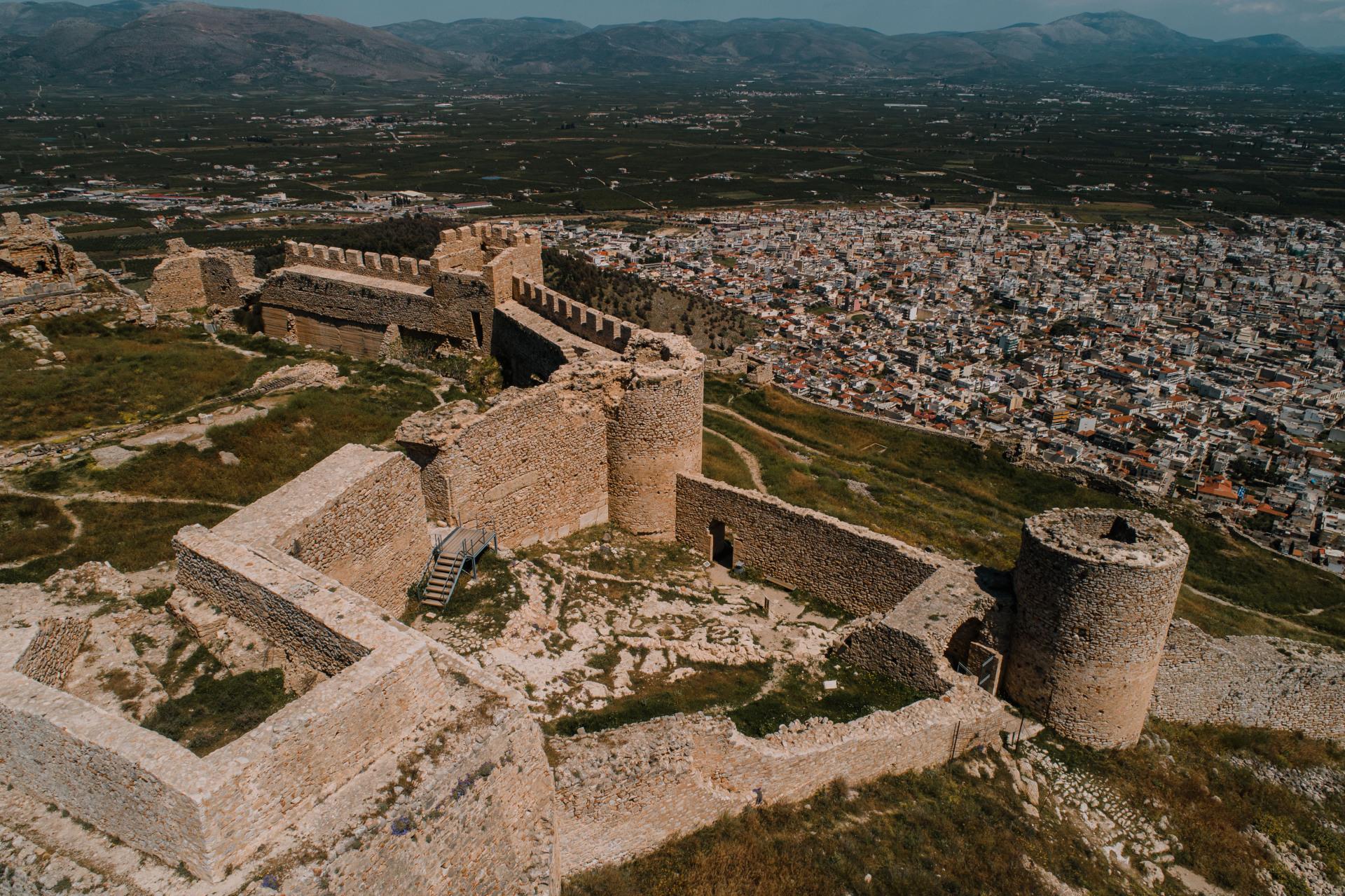
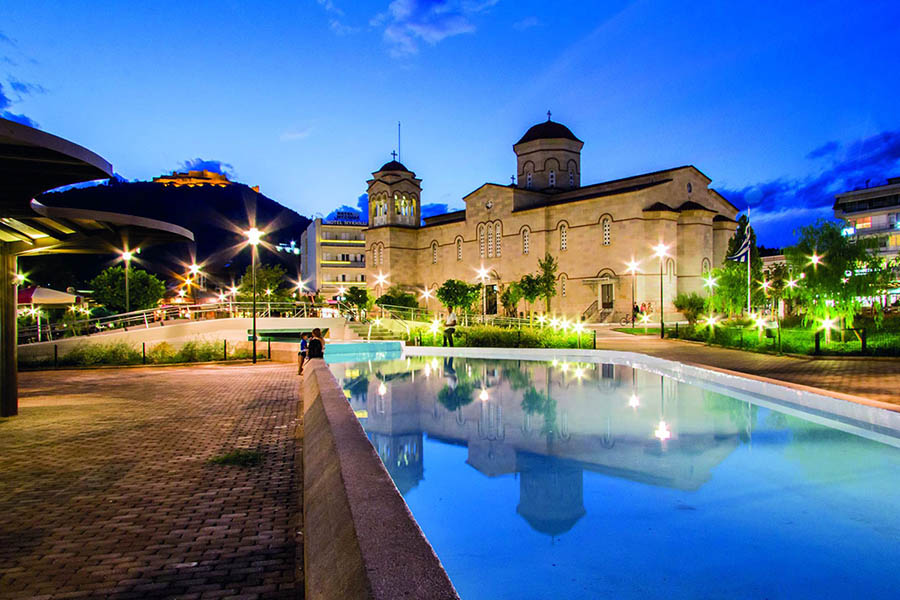
Argos has been inhabited without interruption since the 5th millennium BC, placing it among the oldest continuously lived-in cities in Europe. In myth it was founded by Inachos and consecrated to Hera; in the Homeric poems it is the city of Diomedes, who sailed with the Argives to Troy. On Aspida hill you can still trace a prehistoric settlement and the sanctuary of Apollo Deiradiotes.
In the classical age Argos was one of the great Dorian city-states, a rival to Sparta and a leading centre of the arts - the sculptor Polykleitos, creator of the 'Doryphoros' and the canon of proportions that defined Greek sculpture, was an Argive. Its ancient theatre, with eighty-nine rows of seating, is among the largest of the ancient world.
Romans, Byzantines, Franks, Venetians and Ottomans each passed through and left their mark. Larissa Castle took its present form in three successive phases - Byzantine, Frankish, Venetian - and watches over the plain from 289 metres above the town.
In 1821 Argos welcomed the fighters of the Greek Revolution; in 1829 the Fourth National Assembly convened under Kapodistrias in the church of Agios Ioannis - a founding site of the modern Greek state. Today Argos is a dense, working provincial town of neoclassical façades, open-air markets and a community that keeps its own everyday rhythm.
From Neolithic settlements to the founding assemblies of modern Greece.
First settlements at Argos and on Aspida hill - among the oldest in Europe.
Argos lies within the Mycenaean sphere; chamber tombs on Aspida and Deiras.
A powerful Dorian polis under Pheidon. Rival to Sparta; workshop of Polykleitos.
The ancient theatre is carved into the Larissa hillside - 20,000 seats.
Construction of the Roman Baths and Odeon; the city flourishes as Roman Argos.
Successive fortifications of Larissa Castle by Byzantines, Franks and Venetians.
The Assembly convenes under Kapodistrias in the church of Agios Ioannis - birth of the modern Greek state.
From the ancient theatre and castles to the new museum and the market - all within walking distance.
Carved into the Larissa hillside in the 3rd century BC. Eighty-nine rows of seating for more than 20,000 spectators - one of the largest theatres of the ancient world.
A Byzantine, Frankish and Venetian fortress at 289 m, with a double curtain wall and sweeping views over the Argolic gulf, Mycenae and Nafplio.
Seven millennia in one building - Neolithic pottery, Mycenaean weapons, classical sculpture and Roman mosaics excavated in the surrounding streets.
A remarkable 2nd-century AD complex with mosaic floors and a small odeon, embedded in the heart of the modern town.
The prehistoric acropolis above the town, with an early settlement, the sanctuary of Apollo Deiradiotes and Mycenaean chamber tombs.
The living room of Argos - a 19th-century neoclassical cathedral, traditional cafés and the daily rhythm of a genuine Greek town.
Where the Fourth National Assembly convened under Kapodistrias in 1829 - a founding site of the modern Greek state.
One of the most important sanctuaries of antiquity, dedicated to Hera, patroness of the city - 8 km from the centre.
Every Wednesday and Saturday, local produce from the Argolic plain - oranges, olives, honey and cheeses.
A walking plan built to cover the essentials - and to breathe the rhythm of the town.
Greek breakfast with local produce - fresh bread, Argolic honey, yoghurt and cheeses.
Start at the neoclassical cathedral, a café and the everyday rhythm of the town.
A striking 2nd-century AD complex with mosaic floors, right inside the town.
Climb up to the theatre of 20,000 seats, next to the ancient agora.
Ninety minutes for seven millennia - Neolithic, Mycenaean, Dorian, Roman.
A traditional taverna or a modern bistro in the alleys around the square.
Climb up to 289 metres for the golden hour - views all the way to the sea.
A slow dinner back in town - Nemean wine and grilled dishes of the day.
* Prices and opening hours may change - please confirm on the official Hellenic Ministry of Culture site before your visit.
Argos sits at the heart of Argolida, one hour and forty minutes southwest of Athens. Palladion is right in town - every landmark is within a short walk.
Palladion is a two minute walk from the historic centre and the new Archaeological Museum. Our reception arranges taxis, car hire and guided tours.
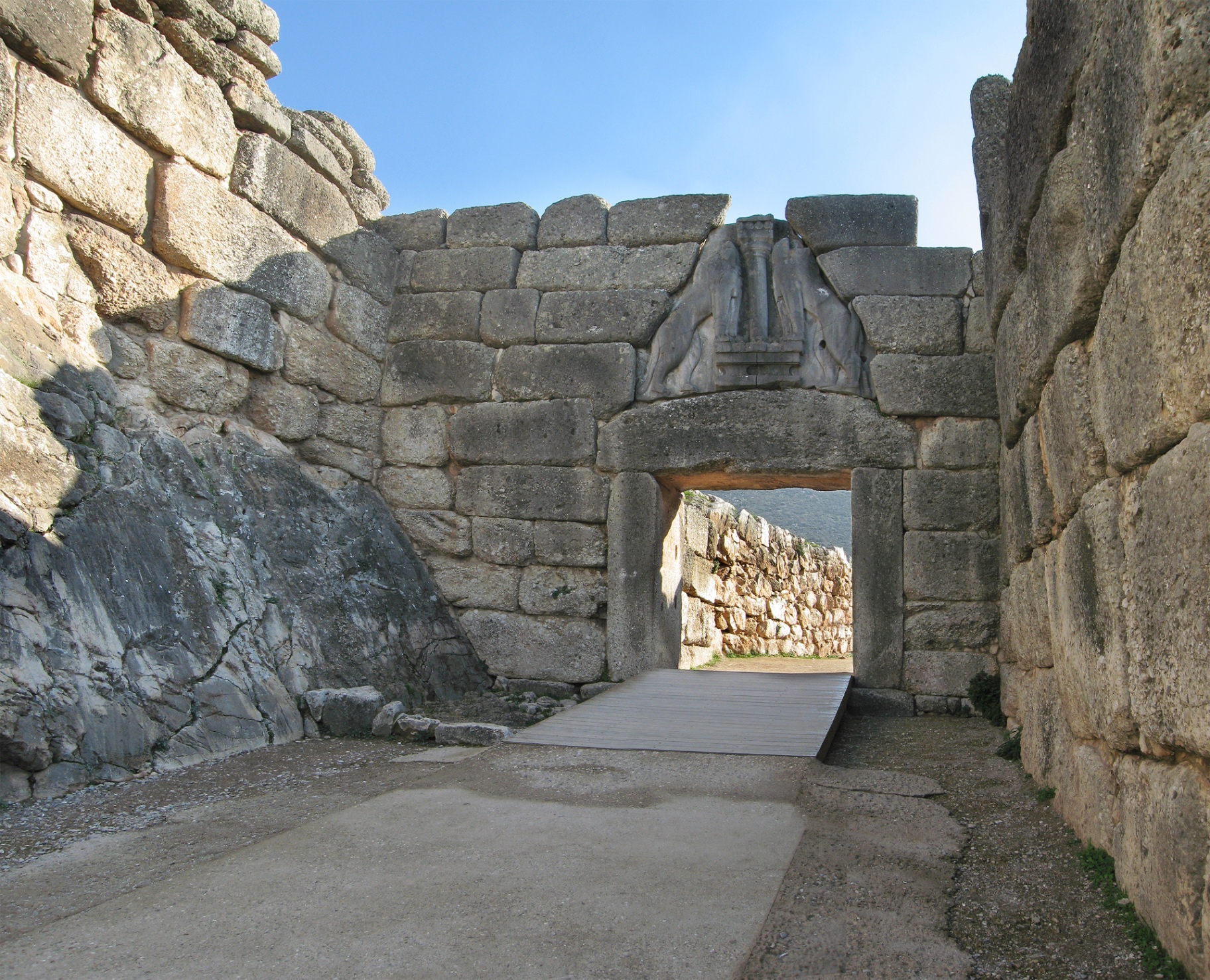
Από την κεντρική πλατεία του Άργους στην Πύλη των Λεόντων σε λιγότερο από 20 λεπτά - ένα πρόγραμμα ημέρας που συνδυάζει ιστορία, τοπίο και τοπική γεύση.
Read article →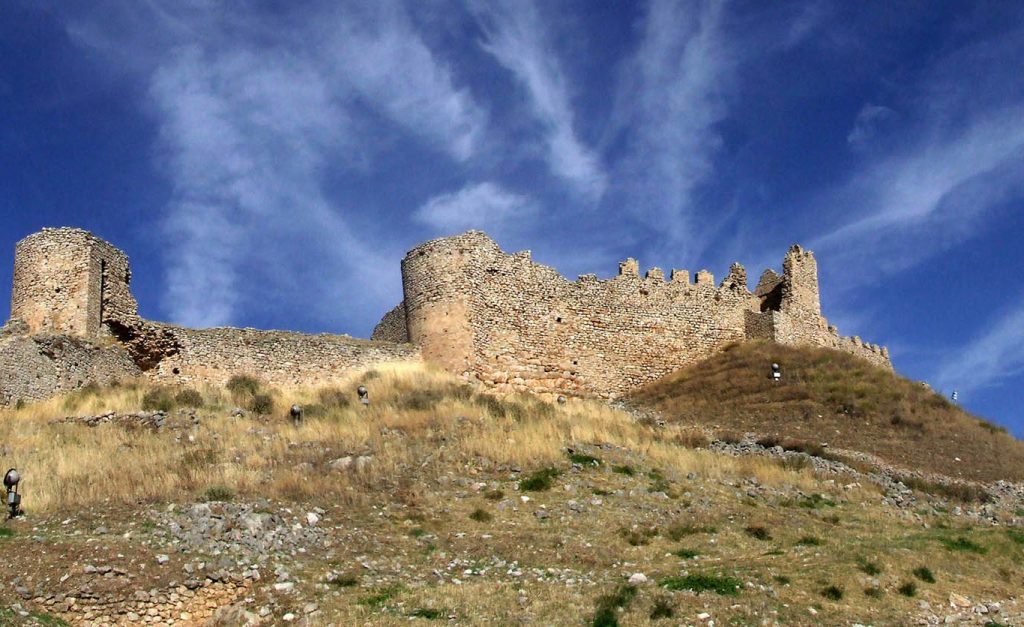
Παραλίες σε 15 λεπτά, μουσεία που κρατούν το ενδιαφέρον των παιδιών, εκδρομές μισής ημέρας και μια ήσυχη πόλη-βάση για όλη την οικογένεια.
Read article →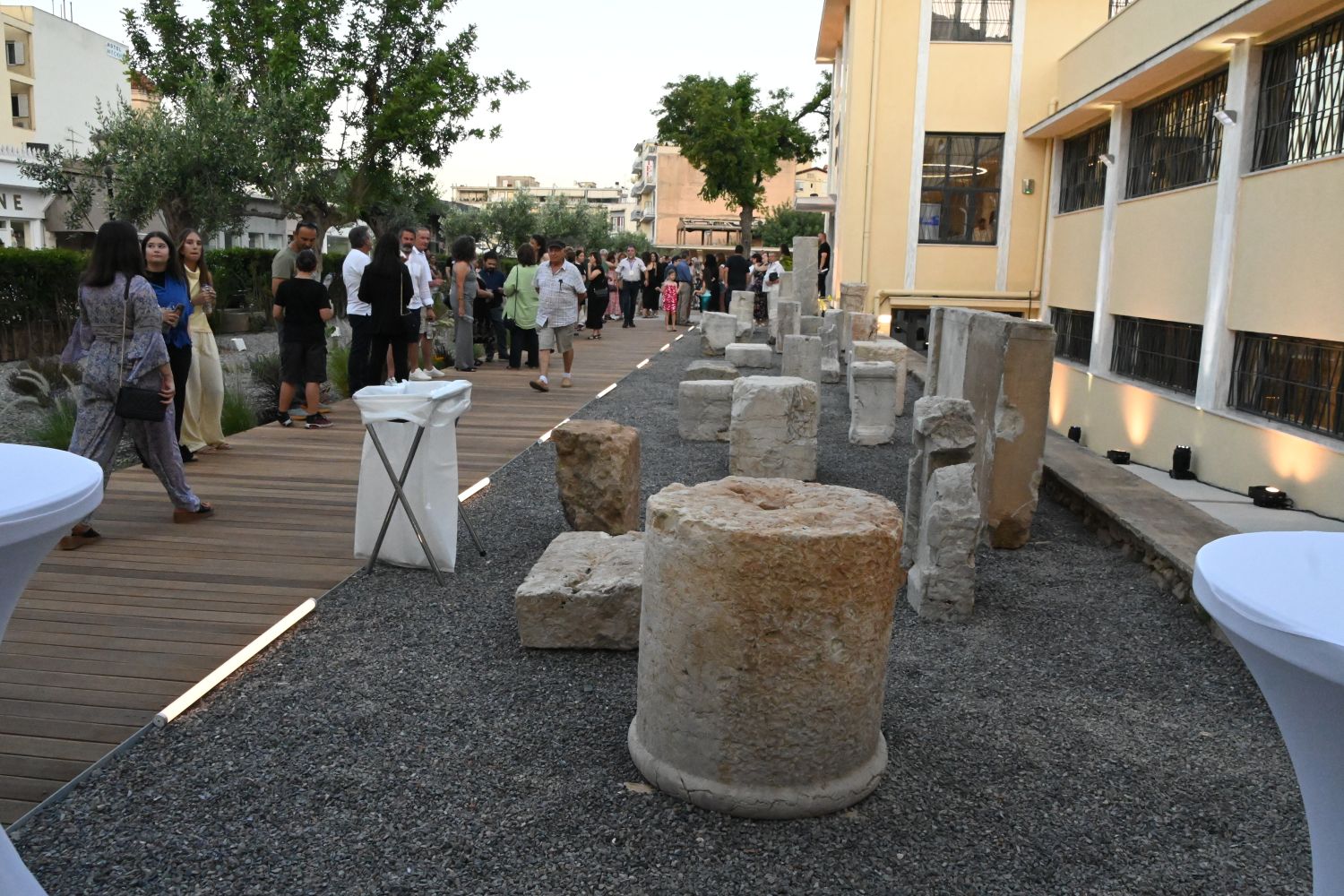
Το Άργος απέκτησε έναν νέο πολιτιστικό προορισμό που παρουσιάζει χιλιάδες χρόνια ιστορίας μέσα από μια σύγχρονη μουσειακή εμπειρία.
Read article →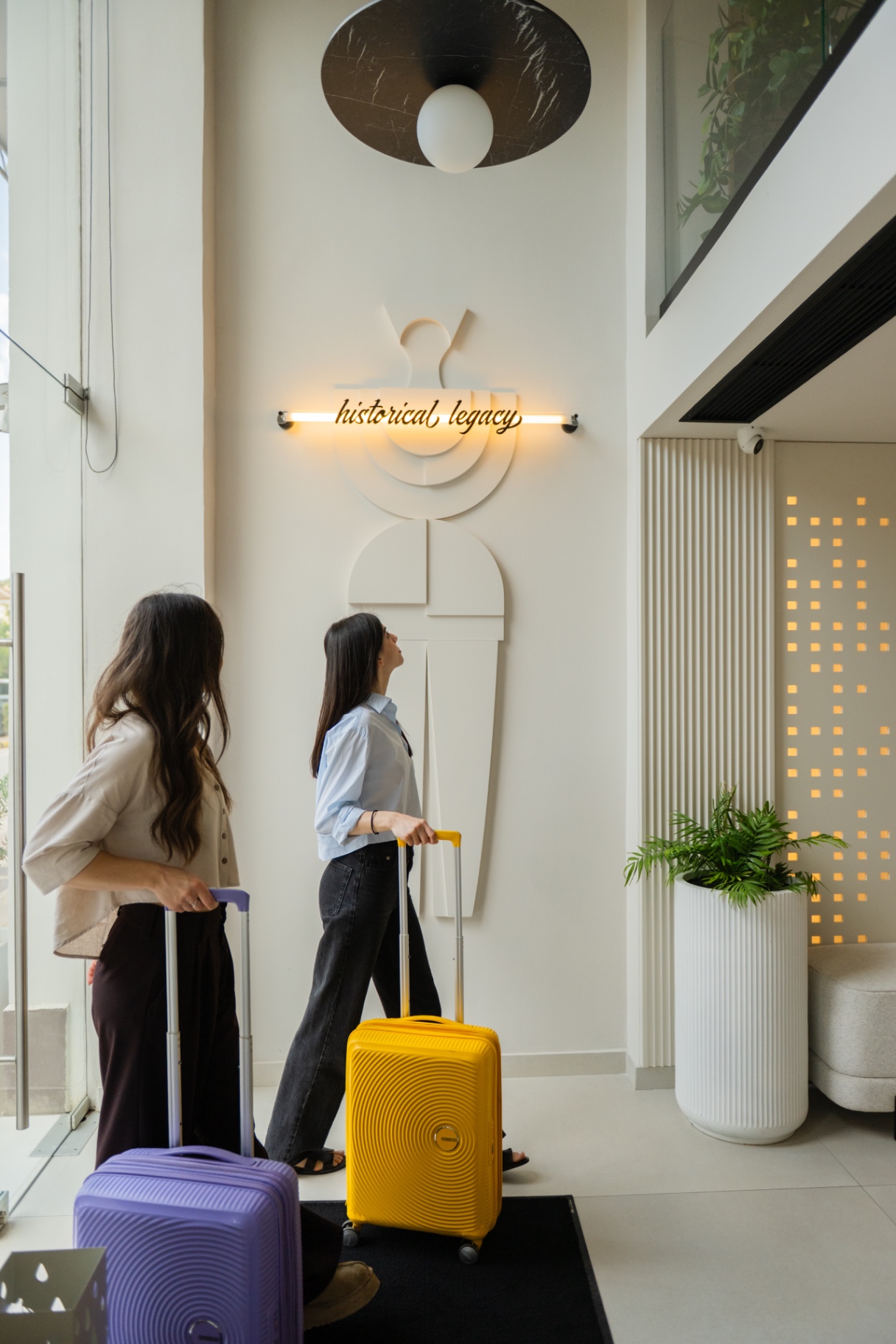
Επτά χιλιάδες χρόνια ιστορίας, μια πραγματική πόλη που ζει, και όλη η Αργολίδα σε ακτίνα 30 λεπτών.
Read article →Palladion is right in the centre of Argos, two minutes from the main square and the museum. Ten rooms, a family-run boutique hotel - a base from which to explore Argolida without rushing.