The essentials
- Ancient Theatre of Argos — one of the largest in the Greek world, carved into the hillside, with the Roman baths beside it.
- Larissa Castle — a Byzantine, Frankish and Venetian fortress crowning the hill; go for sunset over the plain and the gulf.
- Archaeological Museum of Argos — a compact, excellent collection from the Neolithic to Roman periods.
- The Byzantine Museum, housed in the restored Kapodistrias barracks on the square.
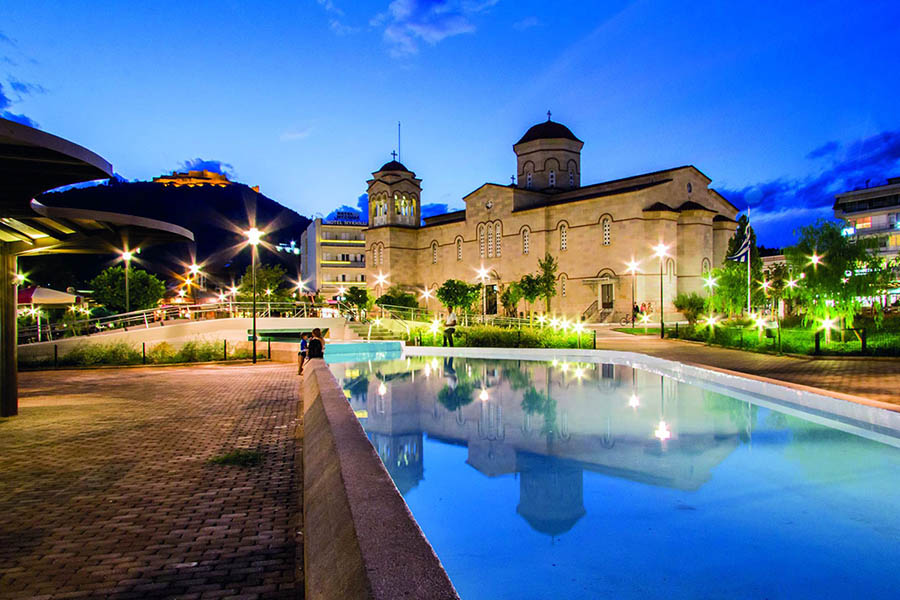
- The central square (Agiou Petrou) — the social heart of the town, with the cathedral, cafés and the neoclassical market hall.
Eat and drink like a local
Argos is farmland: citrus, olives, vegetables and meat from the surrounding plain. Around the square you will find old-school tavernas, ouzeri, patisseries and coffee that costs less than half of what you pay in a resort town.
The Saturday street market is the best hour of the week — producers from the whole Argolid, no tour groups, and the smell of oranges everywhere.
Half-day trips from the square
- Ancient Mycenae — 20 minutes.
- Nafplio and Palamidi — 12 minutes.
- Epidaurus — 40 minutes.
- Nemea wineries — 30 minutes.
- Beaches of the Argolic Gulf — 20 minutes.
- The Pyramid of Elliniko — 15 minutes.
Where to stay in Argos
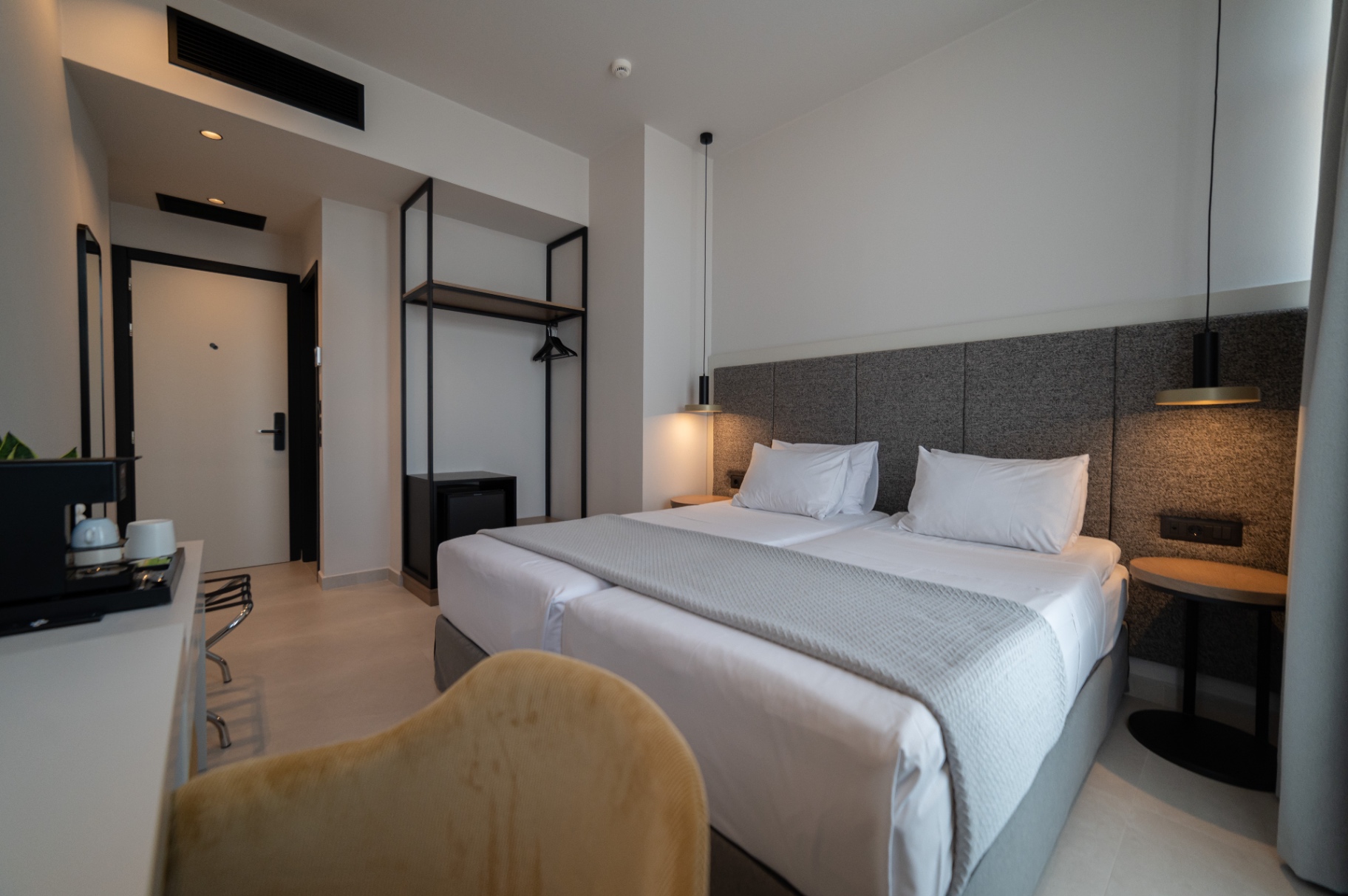
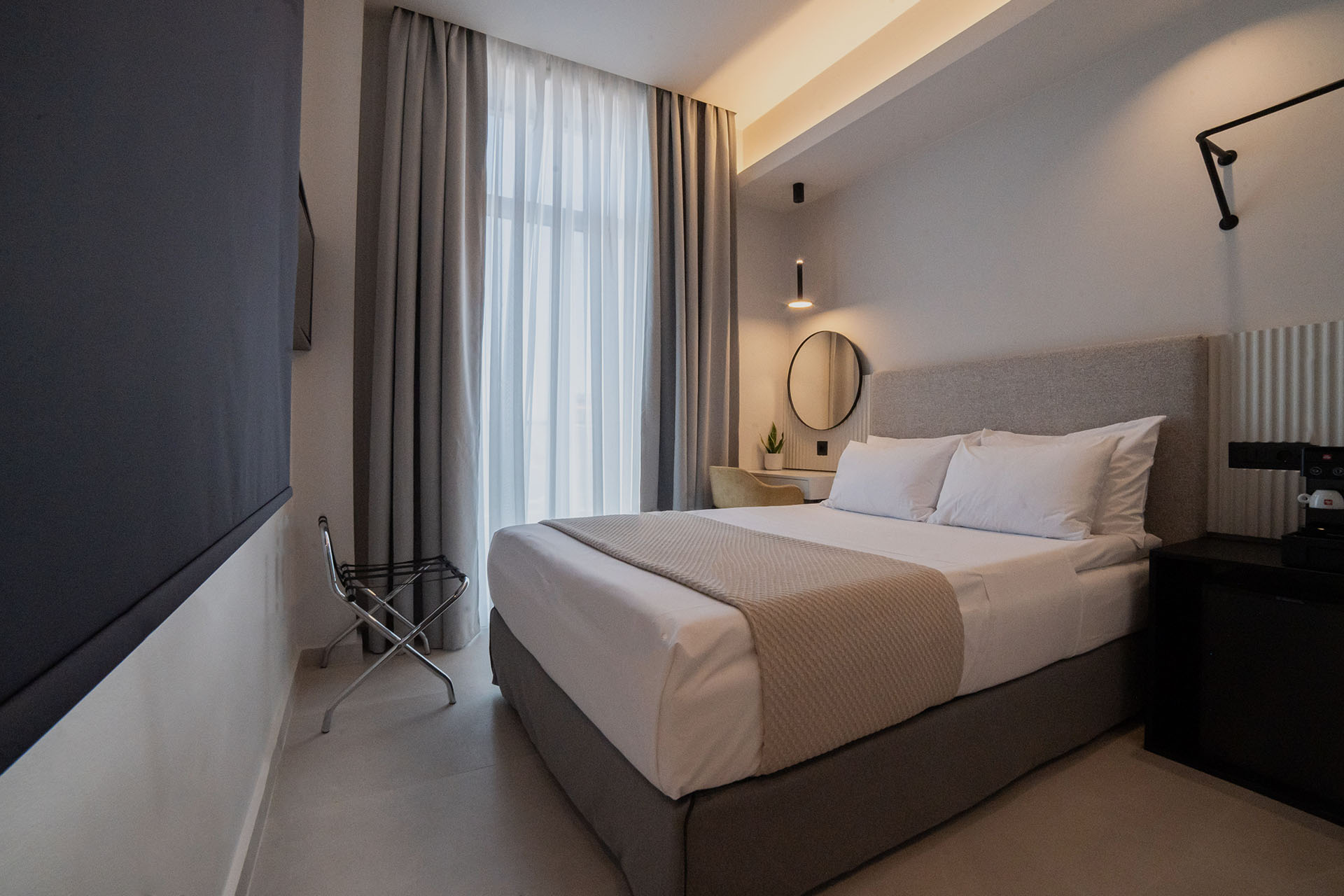
Palladion Boutique Hotel is a ten-room, family-run hotel on the central square — you step out of the door into the middle of everything described above. Certified Greek Breakfast, free WiFi, air conditioning and 24-hour self check-in.
Frequently asked questions
- Is Argos worth visiting?
- Yes — for the Ancient Theatre, Larissa Castle and the archaeological museum, and because it is the most central and best-value base in the Argolid for Mycenae, Nafplio and Epidaurus.
- How many days do you need in Argos?
- One day for the town itself, two or three if you use it as a base for Mycenae, Nafplio, Epidaurus and Nemea.
- Is Argos walkable?
- The centre is entirely walkable. The theatre and castle are a short drive or a decent uphill walk from the square.
Where you'll stay